Is Kona Coffee Really Worth the Price?
Why Kona coffee costs what it costs, what the cup actually tastes like, and when it is not worth paying for.
Is Kona Coffee Really Worth the Price?
For most coffee drinkers, yes, but only if you buy 100% Kona and taste it side by side with something ordinary first. The price is real: the 2025-26 Hawaii crop is forecast at 17.8 million pounds of cherry, down 20 percent from the prior season, and the record farm-gate price hit $2.51 per pound in 2023-24. Whether that translates into a better morning cup depends on your palate and what you are comparing it to.
The honest answer has two halves. The first half is economic: Kona coffee is expensive for reasons that are structural, not marketing. Every cherry is picked by hand, the labor is American, and the entire legal growing zone is a strip roughly 30 miles long and about 2 miles wide on the western slopes of Hualalai and Mauna Loa. The second half is sensory: the cup is genuinely different from commodity coffee, but different in ways that not every drinker notices or values.
This article walks through both halves with the actual numbers, then covers the situations where Kona is a poor buy, and closes with the cheapest way to find out for yourself, which is a tasting rather than a bag. If you want the short version of what to look for on a label, the Kona Coffee Tours site keeps a full guide to Kona coffee brands and labels.
There is a third half that rarely gets said out loud: worth is relative to what you already drink. A person whose daily cup is a dark-roast supermarket blend will have one experience of Kona. A person who already drinks washed Ethiopian or Guatemalan single origins will have another. Neither is wrong. The price question only makes sense once you know which person you are, and the fastest way to learn is to taste Kona next to your own coffee rather than reading tasting notes on a bag you cannot smell.
Why does Kona coffee cost so much more than other coffee?
Kona costs more because almost nothing about its production scales. The belt is small, roughly 30 miles long and about 2 miles wide at elevations of roughly 500 to 3,200 feet, the 2025-26 state crop forecast fell 20 percent to 17.8 million pounds of cherry, and every cherry is picked by hand in multiple rounds across a harvest that runs late August through January. American labor, American land prices, and a tiny supply zone do the rest.
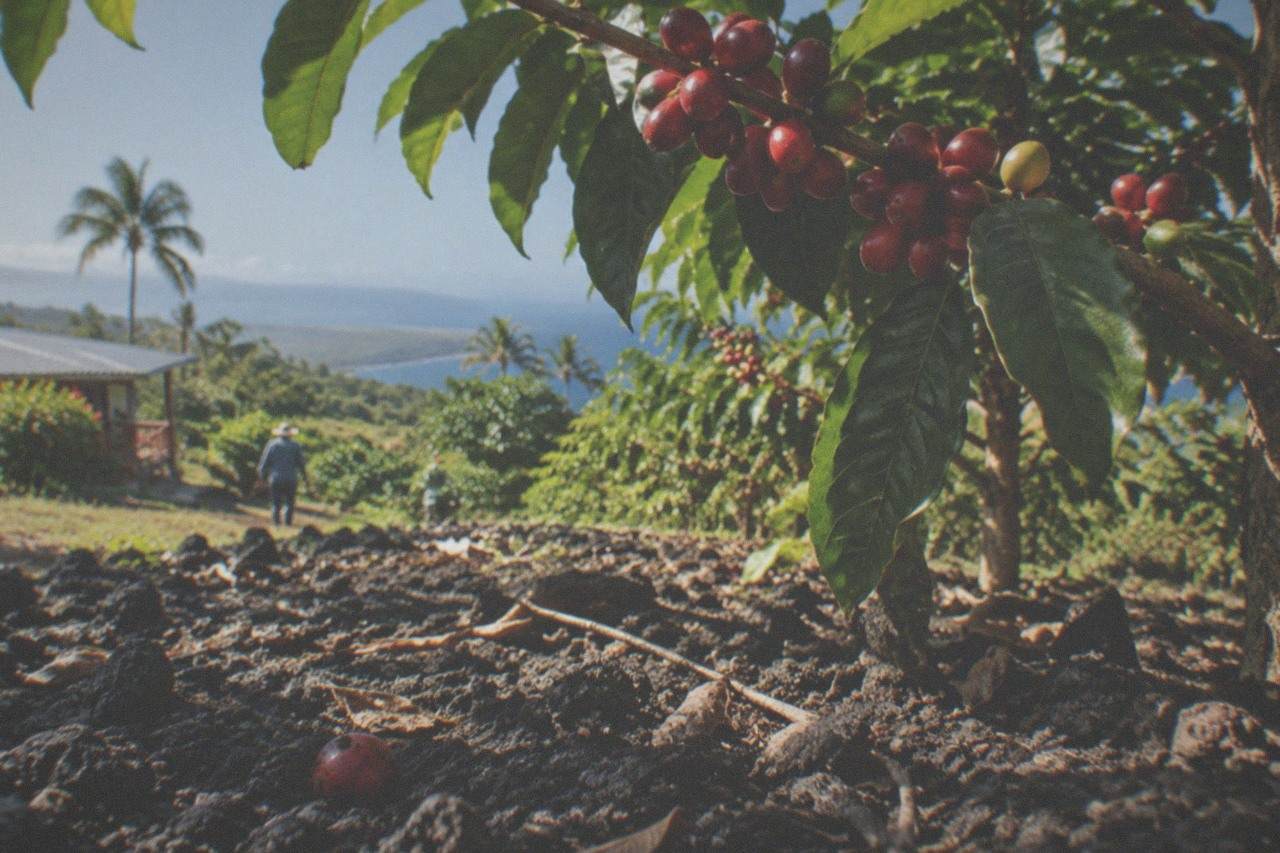
Start with geography. Only coffee grown in the North and South Kona districts of Hawaii Island can legally be called Kona. That is not a marketing boundary, it is the definition written into state law. The zone runs along the western slopes of two volcanoes, and its core elevation band sits between roughly 700 and 2,000 feet, where sunny mornings and afternoon cloud cover are close to dependable. The belt gets more than 60 inches of rain a year, and the porous volcanic soil drains fast. Coffee likes exactly that combination, but only a small strip of one island has it. Daytime temperatures around 85 degrees and nights near 60 slow the cherry's maturation, and slow maturation is one of the oldest explanations for density and sweetness in a bean.
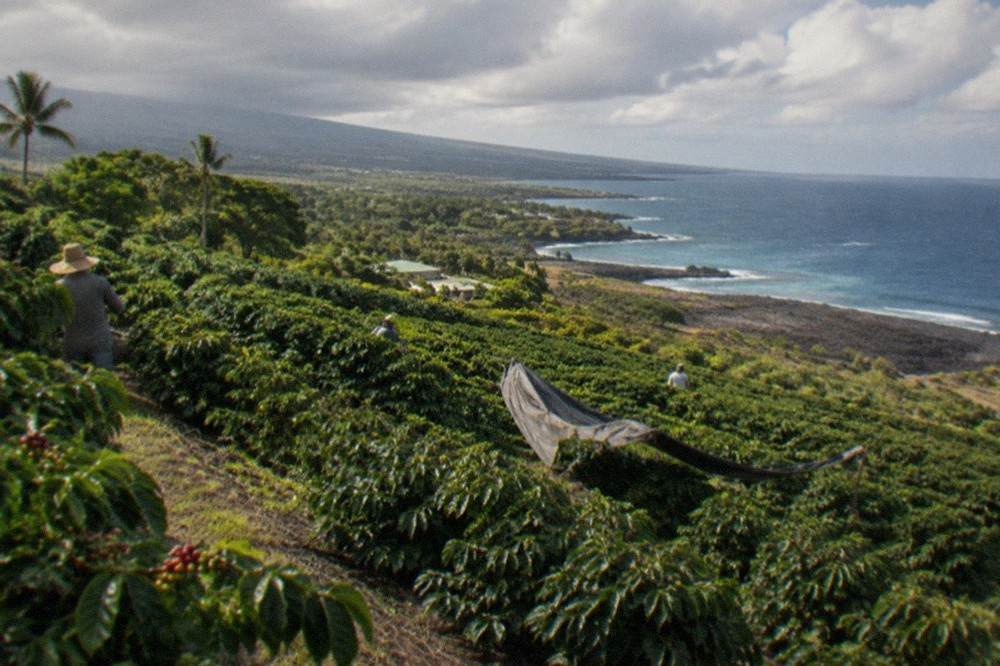
Then add the work. Kona cherry does not ripen all at once. Pickers walk the same rows several times between late August and January, taking only the red fruit each pass, with peak picking October through December. Machine harvesting is not how this belt works, partly because of the slope and partly because selective picking is the whole point. A branch can carry green cherry, ripe cherry, and overripe cherry on the same day, and stripping everything at once would drag unripe and fermented fruit into the lot. That labor happens in the United States, at United States wages, on land that costs what Hawaii land costs. There is no low-cost labor pool quietly subsidizing the price, which is more than can be said for most of the world's coffee.
The market layer sits on top. The average farm-gate price for Hawaii cherry coffee reached a record $2.51 per pound in the 2023-24 season, and 2025-26 green prices have stayed elevated because supply dropped: the USDA forecast puts the new crop 20 percent below the prior season, with bearing acreage down 500 acres to 6,500 and average yield down 810 pounds per acre. Processors were citing roughly $25 to $35 per pound for milled green Kona even before roasting, packaging, and shipping. When a pound of green coffee already costs more than most grocery-store roasted blends, the retail price of a finished bag follows.
| Cost driver | What it means for price |
|---|---|
| Legal growing zone | North and South Kona districts only, about 30 miles by 2 miles |
| Harvest method | Hand-picked in multiple rounds, late August through January |
| Labor market | United States wages and land costs on Hawaii Island |
| 2025-26 supply | State crop forecast down 20 percent to 17.8 million pounds cherry |
| Farm-gate price | Record $2.51 per pound of cherry in the 2023-24 season |
| Green Kona cost | Roughly $25 to $35 per pound milled green cited by processors |
None of this tells you the coffee tastes better. It tells you the price is not arbitrary. There is a difference between a premium that reflects scarcity and cost, and a premium that reflects nothing but a name. Kona carries a large dose of the first and, on some retail shelves, a smaller dose of the second, which is why the label rules in the next section matter so much. A buyer who understands the cost stack can at least tell which part of the price is real and which part is markup.
The scale of the operation explains part of the markup too. Most Kona farms are small family operations, typically around 3 to 7 acres, and many sell their coffee directly rather than through large brokers. A small farm cannot spread fixed costs across a big volume the way a large estate in Brazil or Vietnam can, so milling, roasting, and packaging each carry a higher per-pound cost. On top of that, the coffee tree takes roughly three to five years from planting to first usable harvest, which means a farmer absorbing a bad crop year has no quick way to replace that income.
Weather and pests add another layer of risk that ends up in the price. The coffee berry borer, a small beetle that tunnels into the cherry, arrived in Kona in 2010 and forced growers to adopt strict field sanitation, including picking up fallen and raisin cherry from the ground. Drought years and uneven rainfall can shrink both the size of the cherry and the total yield, and the 2025-26 forecast drop shows how quickly supply can tighten. Every one of those risks lands on a farmer with a few acres, not on a corporation with a reserve fund, and the price of a bag of Kona is partly the cost of that exposure.
Is Kona coffee really worth it?
For a drinker who notices sweetness, low bitterness, and a clean finish, 100% Kona is worth the price at least once, tasted side by side with your usual coffee. The cup runs smooth and mild with floral and nut notes rather than punchy acidity. If you take coffee mostly as a caffeine delivery system with cream and sugar, the premium buys you very little, and a 10% Kona blend buys you almost nothing at all.
The cup itself is the part the price argument always skips. Kona's reputation is not built on intensity. It is built on balance: medium body, low acidity compared with bright African coffees, and a smoothness that shows up most clearly when the coffee is brewed clean and drunk close to black. Drinkers describe floral notes, nuts, sometimes a brown-sugar sweetness. The volcanic soil and the cloud-cover climate produce a bean that is dense and even, and the hand sorting means fewer defects in the cup. Fewer defects is not a tasting note, but it is the mechanical reason a clean cup tastes clean.
The comparison that matters is not Kona versus another premium single origin. It is Kona versus whatever you actually drink on a Tuesday morning. Brew both, taste both, and the differences either land or they do not. Some people taste the smoothness immediately and never go back. Some people taste two hot brown liquids. Both reactions are legitimate, and both are reasons the cheapest way to answer this question is a tasting flight on the island, not a $40 bag ordered blind. The Kona coffee tasting guide covers where to do exactly that, farm by farm.
The label rules decide whether you are even tasting the thing you paid for. Since July 1, 2024, Hawaii law requires any coffee using a Hawaii geographic origin name to state the percent of Hawaii-grown coffee on the front label, with a "Contains:" list of all origins and percentages, per the state labeling guidelines. A "Kona blend" can legally contain as little as 10 percent Kona today, though that minimum rises to 51 percent on July 1, 2027. "Kona Coffee" with no percentage means 100 percent, and the Kona Coffee Council runs a voluntary 100% Seal of Approval for growers who want third-party backing.
That legal floor is the single most useful thing a buyer can know. A bag marked "10% Kona blend" is mostly not Kona, and the 90 percent is whatever the roaster chose. Paying a Kona-ish price for that bag is where most of the "overrated" verdicts come from. Paying for 100% Kona from a named farm, at a price that reflects roughly $25 to $35 per pound green plus roasting, is a different purchase entirely. The blend rule also cuts the other way: after July 1, 2027, a blend will need at least 51 percent Kona, which should push blend prices up and make the 100 percent comparison fairer across the shelf.
When is Kona coffee NOT worth the price?
Kona is not worth it when you buy a 10 percent blend at a premium, when the coffee will be drowned in milk and syrup, when the bag carries no farm name or percentage, or when you have never tasted 100% Kona and are ordering blind online. In those cases the money buys a label, not a cup, and a grocery single origin at a quarter of the price will do the same job.
The blend trap comes first. Under current law a blend needs only 10 percent Kona to carry the name, and that floor does not move to 51 percent until July 1, 2027. A blend can be a fine product, but it is not the cup this article is about, and it is frequently priced as if it were. If the front label does not say 100 percent, or does not show a percentage at all alongside a "Contains:" list, assume you are buying mostly something else. The label law exists precisely because this shelf was confusing for decades.
The brewing method matters more than most buyers admit. Kona's signature is subtlety, and subtlety does not survive a quad-shot latte with caramel. If your coffee is a base for milk and sugar, the premium is wasted; buy for strength and price instead. The same logic applies to stale beans. Kona's mild, clean character fades faster than a dark-roast punch, so a bag that sat in a warehouse for months tastes like any old bag. Roast dates matter more on a delicate coffee than on a loud one, and a loud dark roast can hide its age in a way Kona cannot.
The blind purchase is the last trap. Ordering a $40 bag online without ever having tasted the profile is a coin flip with expensive sides. The fix is cheap: taste it first. On the island, that means a tasting flight or a farm visit, and several farms pour for free or nearly free. The "Short Sampler Walk, Max 25" at Heavenly Hawaiian starts from $5 with the fee credited to the farm gift shop, Greenwell Farms runs a free guided tour daily with no reservation, and Mountain Thunder's free short tours run daily as walk-ins. The free Kona coffee tours guide lists all of them with hours and meeting points.
| Situation | Worth the premium? | Better move |
|---|---|---|
| Drinking it black or close to black | Usually yes | Buy 100% Kona from a named farm |
| Milk and sugar drinks | No | Any solid single origin, cheaper |
| Bag says "Kona blend," no percentage | No | Wait for the 51 percent rule or buy 100% |
| Ordering online, never tasted Kona | Coin flip | Taste first on the island |
| Gifting to a coffee lover | Yes | 100% Kona with farm name and seal |
One more honest note: if you just want to understand what the fuss is about, what is so special about kona coffee covers the growing conditions in more depth than a price argument can.
How can you taste the difference before paying for it?
Taste before you buy, and the island makes that cheap. The Hala Tree cupping workshop runs about an hour from $50 per person with a cap of 4 participants, the Hala Tree farm walk starts from $10 and carries a 4.9 rating from 80 reviews, and free tours at Greenwell and Mountain Thunder end in tastings. A structured cupping teaches you more in one hour than a month of guessing from bags.
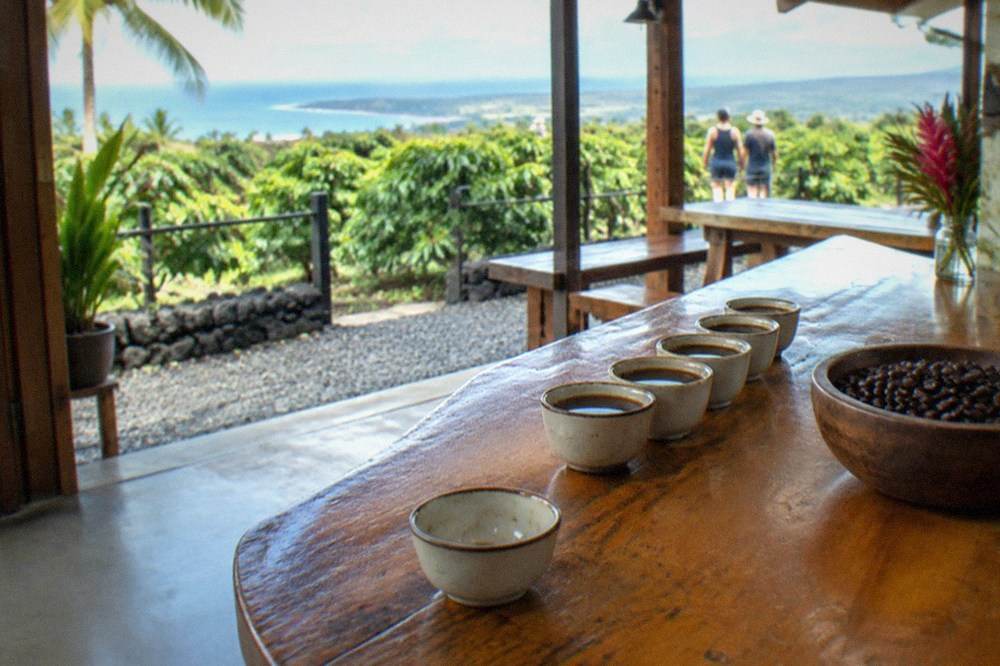
Cupping is how the coffee trade answers this question for itself. Dry grounds get smelled, then smelled again after the water goes in, then the liquor is slurped from a spoon so several coffees can be judged side by side. That slurp sprays the coffee across the palate and is how professionals judge a lot at a glance. the reason professionals can judge a cup in seconds. Done properly, a cupping strips away brew-method variables so what you taste is the bean itself, which is exactly the question a skeptical buyer is trying to answer. Hala Tree Coffee runs a cupping workshop capped at 4 participants per session, about an hour, from $50 per person, meeting at the farm on Mamalahoa Highway in Captain Cook. It is a new listing with no reviews yet, which also means sessions are quiet and the pours are generous. Four spots per session is the whole capacity, so it books out on its own smallness.
If you want the cheaper on-ramp, the same farm's walking tour, the "Small-Group Farm Walk, Max 12," starts from $10, runs about an hour, and carries a 4.9 from 80 reviews. You walk the rows, see the process, and taste at the end. Mountain Thunder's "Organic Farm and Mill, 2 Hours" is the longest farm walk on the roster at 2 hours from $30, with a 4.8 from 27 reviews, and it adds a working mill to the usual field walk, so you see pulping and drying machinery most visitors never encounter. Between those and the free options, you can taste a serious cross-section of the belt for less than the cost of one premium bag shipped home.
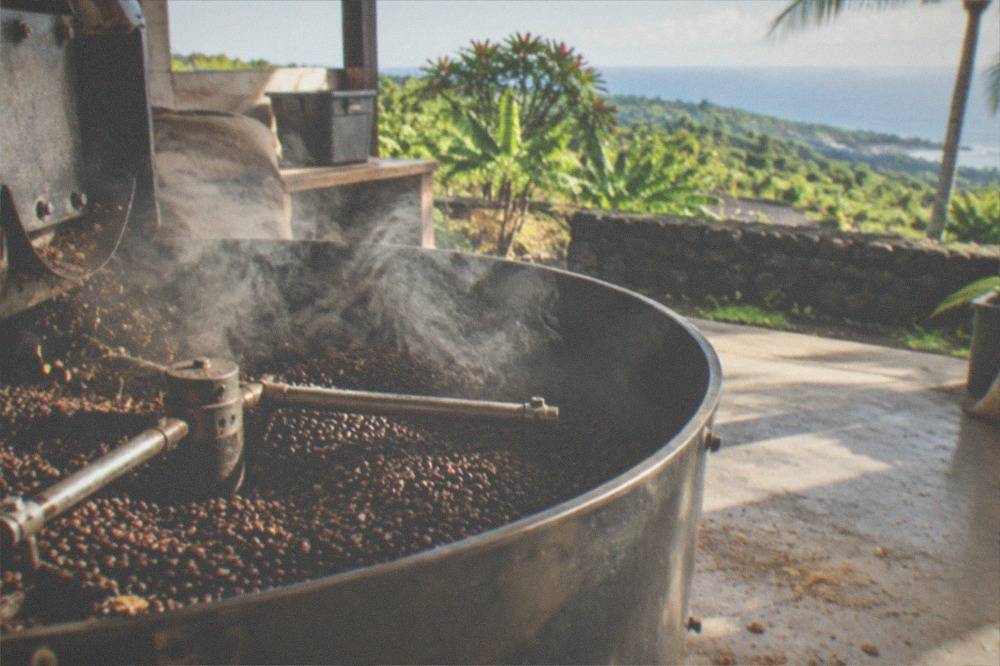
Timing can improve the visit too. Peak picking runs October through December, when you can watch cherries come in, wet milling run, and beans sun-dry on the decks. Arrive in that window and the tour stops being a walk past trees and becomes a look at a working harvest. If your trip lands in early November, the Kona Coffee Cultural Festival runs November 6 to 15 in 2026, with farm tours, a cupping competition, and tasting events across the belt, per the festival's official schedule. Tasting at festival time means tasting a lot of farms in a few days, which is the fastest way to learn whether one farm's roast speaks to you more than another's.
Common Questions About Kona Coffee Value
Is Kona coffee really worth it?
For drinkers who taste the difference, yes, if it is 100% Kona from a named farm and brewed clean. The premium reflects real costs: hand picking, American wages, a tiny legal growing zone, and a 2025-26 crop down 20 percent. If you drink coffee with heavy milk and sugar, or buy blends, the premium buys you little.
Why is Kona coffee so expensive?
Supply is small and costs are high. The legal belt is about 30 miles long and 2 miles wide, every cherry is hand-picked between late August and January, and the record farm-gate price hit $2.51 per pound of cherry in 2023-24. Green Kona runs roughly $25 to $35 per pound before roasting.
What does a "Kona blend" actually contain?
Under Hawaii law in effect since July 2024, a blend using the Kona name must currently contain at least 10 percent Kona coffee, with the percentage and a "Contains:" origin list on the front label. The minimum rises to 51 percent on July 1, 2027. "Kona Coffee" with no percentage implies 100 percent Kona.
How can I tell real Kona coffee from a fake?
Look for "100% Kona" on the front label, a named farm, and ideally the Kona Coffee Council's voluntary Seal of Approval. Blends must state their percentage. If the label is vague about origin or percentage, treat it as a blend regardless of the price.
What is the cheapest way to try Kona coffee before buying?
Taste on the island. Greenwell Farms runs free daily guided tours ending in tasting, Mountain Thunder pours on free daily walk-in tours, and Heavenly Hawaiian's short sampler starts from $5 with the fee credited to the gift shop. A structured cupping, like Hala Tree's workshop capped at 4 people, costs from $50 and teaches the most.