Kona Coffee Living History Farm: Tickets, Hours and What You See
The Kona Coffee Living History Farm is a preserved century-old coffee farm in Kealakekua, run as a walk-through museum rather than a working tour, and it is one of the few Kona farm experiences sold direct only.
Short answer
Admission is $20 for adults, $10 for students aged 7 to 17, and free for children under 7, with Hawaii residents at $15 and $5. It is open Tuesday, Thursday and Friday from 10:00 to 2:00, self-guided, and tickets are sold direct by the Kona Historical Society, never through a booking platform.
What is the Kona Coffee Living History Farm?
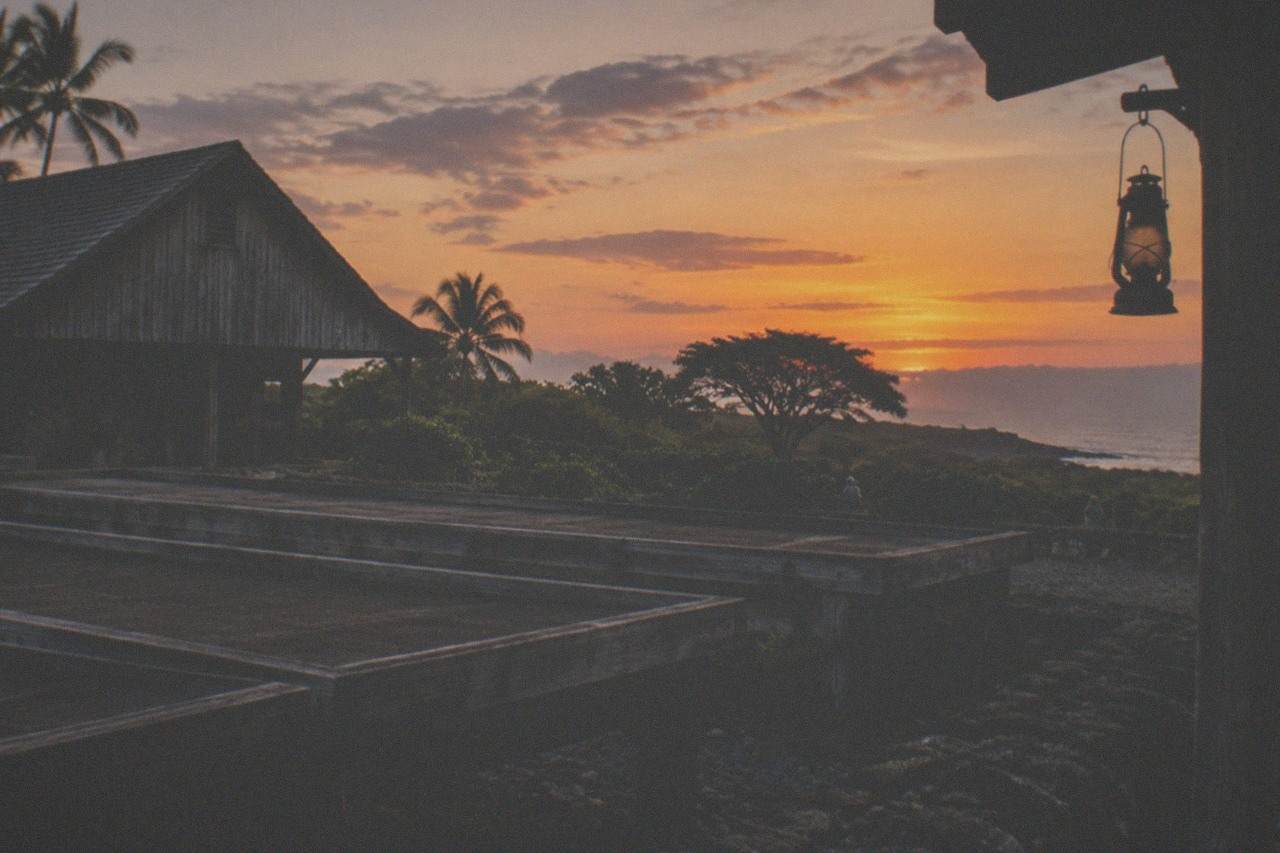
The Kona Coffee Living History Farm is a preserved, century-old coffee farm in Kealakekua that the Kona Historical Society runs as an open-air museum. It is not a commercial farm with a gift-shop tour attached, it is the farm itself, kept the way it looked when Japanese immigrant families worked the belt generations ago. Admission is direct only, and the visit is self-guided.
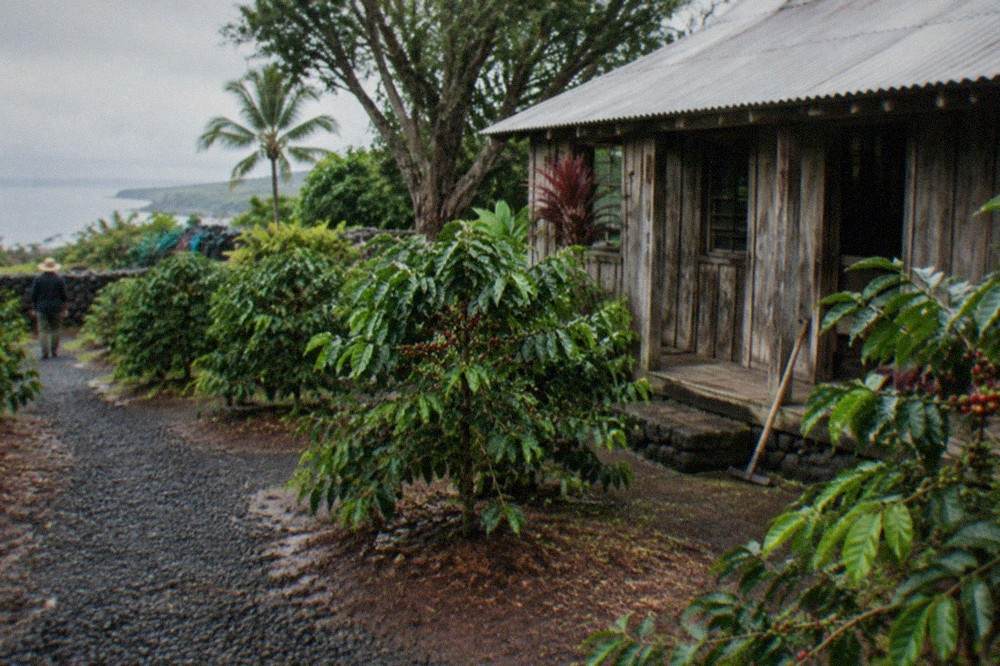
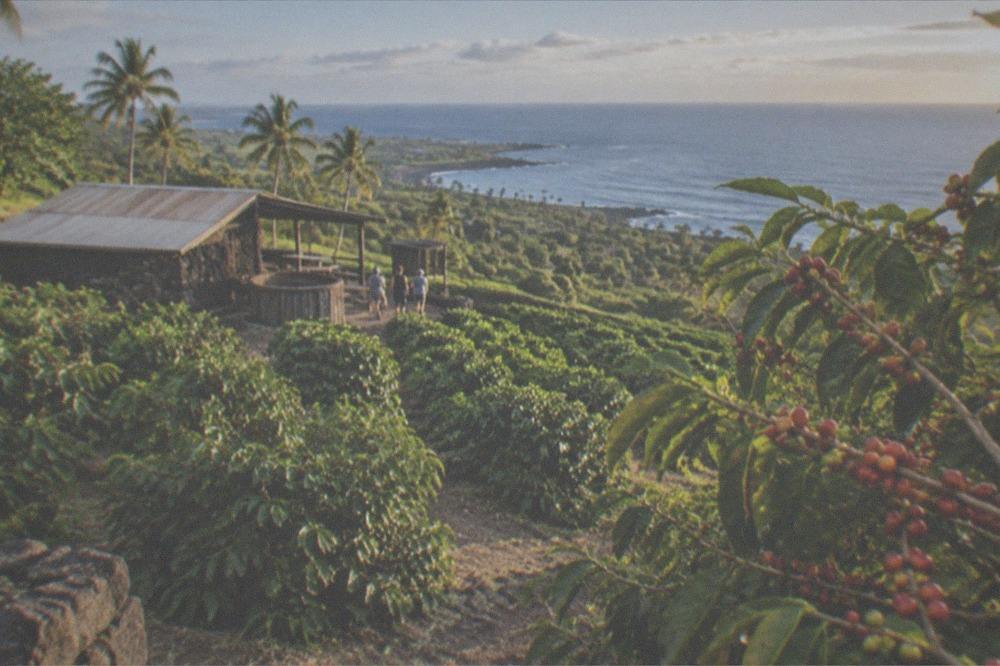
The farm sits at 81-6551 Mamalahoa Highway in Kealakekua, on the same stretch of road as several working farms. It occupies the land the Uchida family worked, and the Kona Historical Society restored it to tell the story of the Japanese coffee farmers who built the Kona belt. You walk the property at your own pace, past the family farmhouse, the coffee trees themselves, the kuriba mill and the hoshidana drying deck.
What makes it unusual for Kona is that nothing here is being sold to you as part of the visit. There is no tasting room pitch and no roasting demonstration that ends at a register. The orchard is a living part of the exhibit, the buildings are the exhibit, and the donkeys are part of the story rather than a photo op with a fee attached. For a fuller picture of which farms in the area do run guided walks, the Kona Coffee Tours site breaks the whole district down farm by farm.
If you are planning a wider trip around the district, the coffee belt context matters here: the farm sits inside the roughly 30-mile-long, 2-mile-wide strip on the western slopes of Hualalai and Mauna Loa where coffee can legally be called Kona. The belt guide, where the Kona coffee belt actually runs, explains the boundaries and why this farm's location in South Kona put it in the heart of the industry it now preserves.
How much are tickets, and when is it open?
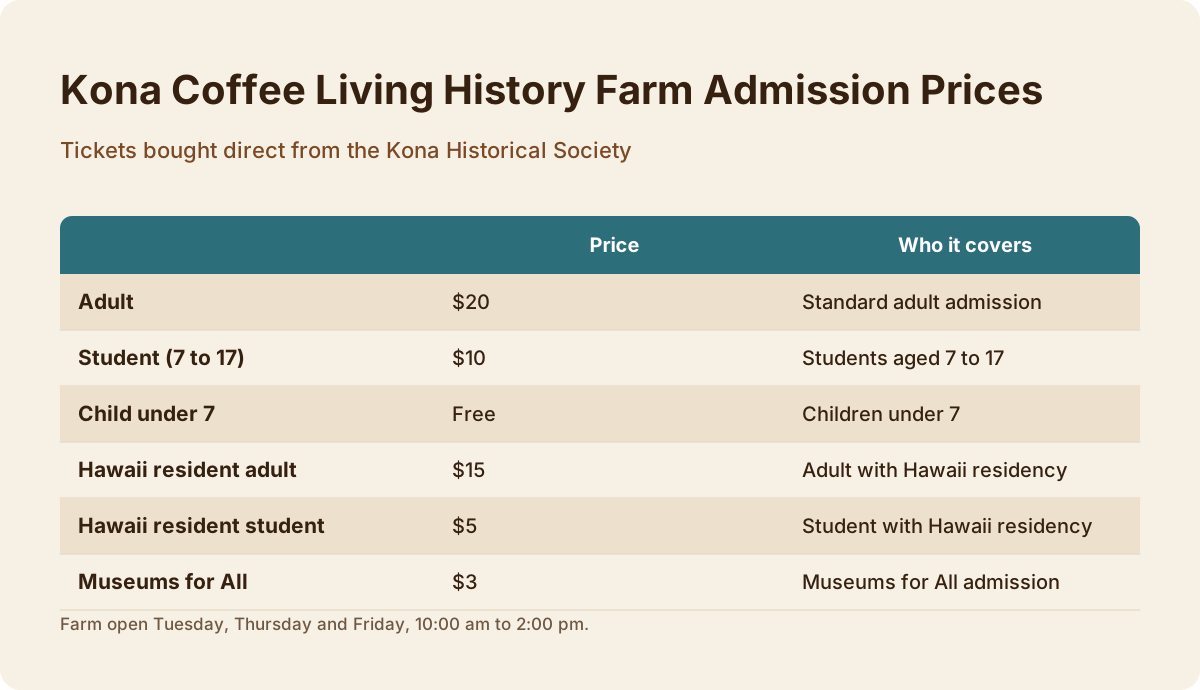
Adult admission is $20, students aged 7 to 17 pay $10, and children under 7 enter free. Hawaii residents pay $15 for adults and $5 for students, and Museums for All admission is $3. The farm is open Tuesday, Thursday and Friday from 10:00 am to 2:00 pm, and every ticket is bought direct from the Kona Historical Society, not through any booking platform.
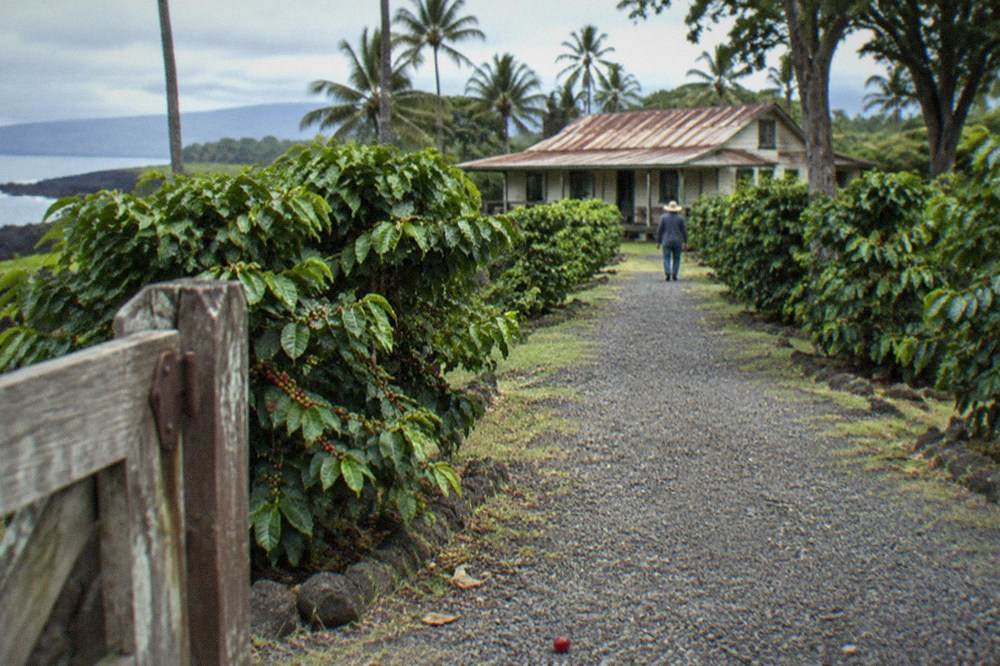
The three-day week catches a lot of visitors out. People build a Kona itinerary around a Saturday or Sunday and arrive to a closed gate, because the farm only opens Tuesday, Thursday and Friday, and only for four hours in the middle of the day. If your travel dates are fixed around a weekend, plan this one for another trip day and fill the off days with the working farms that run daily walks.
| Ticket type | Price |
|---|---|
| Adult | $20 |
| Student (7 to 17) | $10 |
| Child under 7 | Free |
| Hawaii resident adult | $15 |
| Hawaii resident student | $5 |
| Museums for All | $3 |
The direct-only point is worth dwelling on, because it is the one thing that separates this farm from almost every other coffee stop on the island. The Kona Coffee Living History Farm is not one of the bookable tours anywhere, and any site that sells you a ticket to it is not selling you this farm. The Kona Historical Society runs admission itself, and the official page at konahistorical.org carries the current hours and admission details. If a booking page in your search results claims to include the Living History Farm, read the fine print, because what it usually includes is a different, working farm.
Compare that with the paid farm walks nearby, which run from $5 to $49 per person on this site's roster, and the free guided tours at Greenwell Farms, and the pricing starts to make sense. You are not paying for a tasting or a guide. You are paying museum admission for a restored property, and $20 is in line with what the island's other small historic sites charge. For the full landscape of free and cheap options, which Kona coffee tours are actually free covers Greenwell, Mountain Thunder's short walk-ins and the other no-cost stops.
What do you actually see on the self-guided loop?
The loop takes you past the Uchida family farmhouse, the coffee orchard, the kuriba wet mill and the hoshidana drying deck, with costumed interpreters demonstrating period techniques on open days. The kuriba is the pulping mill where ripe cherry was processed, and the hoshidana is the rolling-roof drying deck where beans sun-dried. Kona Nightingale donkeys live on the property.
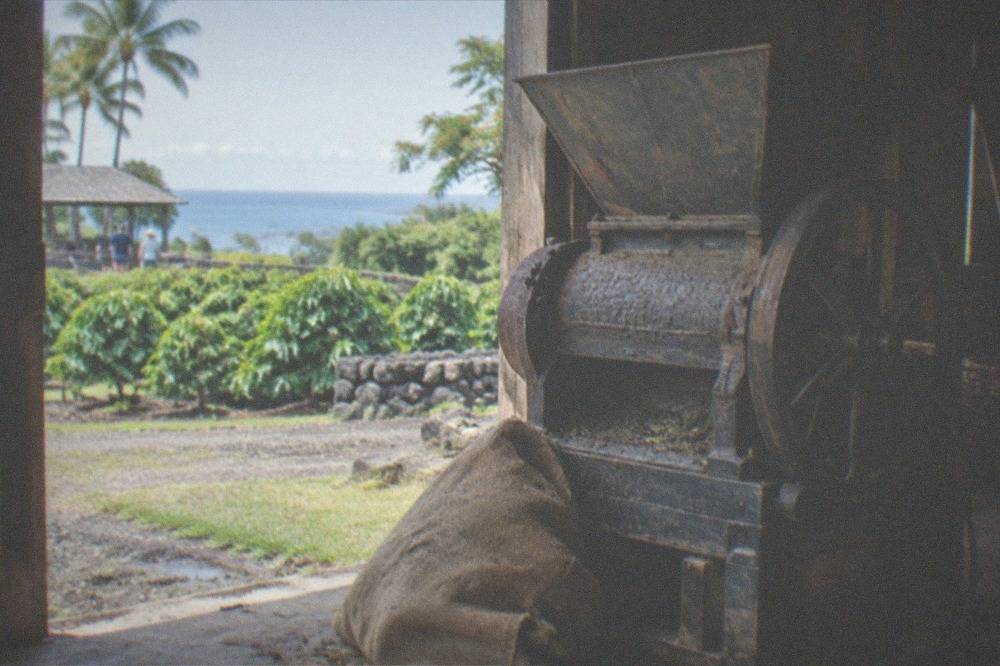
The two buildings carry the visit, and both are the real machines of the old Kona process. In the kuriba, the freshly picked cherry was pulped, removing the skin and fruit from the bean inside. Farm staff run demonstrations on open days, so the hand-cranked equipment actually moves, which is the difference between reading a placard and watching a pulper work. Kids tend to gravitate here, partly because the machinery is hand-powered and partly because the noise is satisfying.
The hoshidana is the structure most visitors have never seen anywhere else. It is a drying deck with a roof on rails: on clear days the roof rolls back and the beans sun-dry in the open, and when the characteristic afternoon clouds or rain arrive, the roof rolls forward and the batch is protected without anyone carrying beans indoors. It is a direct answer to the Kona belt's climate, sunny mornings and wet afternoons, built in wood.
The Kona Nightingale donkeys are not decoration. Donkeys were the working animals of the belt, carrying coffee cherry down steep slopes before trucks reached every farm, and their braying at night is where the name comes from (see Why Kona Is Special). The farm keeps donkeys on the property as part of the exhibit, and they are usually the first thing younger visitors ask about.
Because the visit is self-guided, your experience depends on how much reading you are willing to do. The interpreters fill the gaps on demo days, but on a quiet Tuesday you may have the farm nearly to yourself, which is a pleasure or a disappointment depending on what you came for. There is no tasting at the end and no farm store selling the farm's own coffee, because the farm is a museum, not a producer. If you want the cup in your hand at the end of the walk, that is what the working farms are for.
Who were the Uchida family?
The Uchida family were Japanese immigrant coffee farmers who worked this Kealakekua land in the era the farm preserves, and the property is restored to their time. Their story stands in for the hundreds of Japanese families who cleared and worked the Kona belt's rocky slopes, and the farmhouse is furnished as they would have known it.
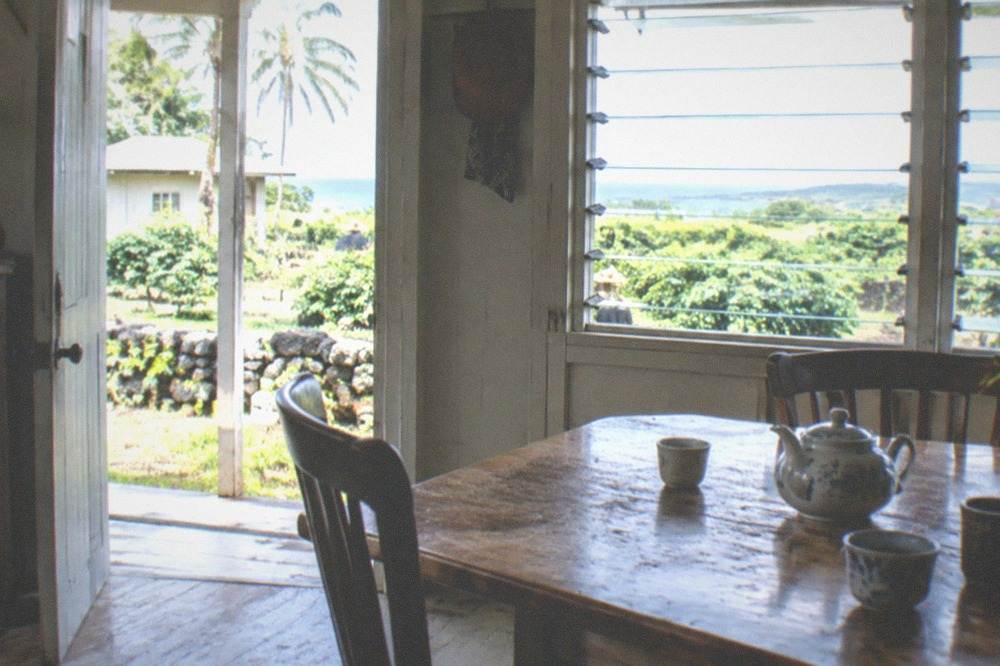
The Kona coffee industry as it exists today was built substantially by Japanese immigrants who arrived from the late nineteenth century onward, many under labor contracts, who then stayed as independent smallholder farmers. The belt's character, small family farms on a few acres each rather than big plantations, comes from that settlement pattern. The Uchida farm is the preserved example of the type: a family-scale operation where the house, the mill and the drying deck all sit within a short walk of each other.
Inside the farmhouse, the restoration is detailed down to the household objects, the furo bath and the garden plants the family kept for the kitchen. Interpreters on open days explain how the household ran during harvest season, when every hand went to picking. It is the part of the coffee story that working farm tours compress into a sentence or skip entirely, because a commercial farm's hour is spent on the product, not the people.
For visitors connecting this to the wider district, the farm sits minutes from Greenwell Farms in Kealakekua, and the contrast between the two is the whole point of seeing both. One is a large working operation with a laser optical sorter on its processing line, the other is a hand-cranked mill from the era before any of that. Doing them on the same day gives you the before and after of Kona coffee in about three hours.
How is it different from a working farm tour?
The Living History Farm is a museum about how Kona coffee was farmed a century ago, while a working farm tour shows you the live process on a commercial operation today. The historic farm has no tasting, no farm store and no guided walk, and it runs three days a week, whereas the bookable farm tours run most days and end with coffee in your hands.
| Living History Farm | Typical bookable farm walk | |
|---|---|---|
| What it is | Restored historic farm museum | Working commercial farm |
| Format | Self-guided loop | Guided walk with a guide |
| Tasting at the end | No | Yes, on nearly all of them |
| Days open | Tue, Thu, Fri | Most run daily or six days |
| Ticket source | Direct from the historical society | The operator's live listing |
| Typical price | $20 adult | From $5 to $49 on this site's roster |
The differences matter most for two groups. Families with children often do better at the working farms, because the tasting and the animals-in-residence at a place like Heavenly Hawaiian hold attention in a way a furnished farmhouse does not. Visitors with a historical interest, or anyone who has already done two tastings in a day, get more from the museum, because it explains where the whole district came from.
If you want the guided experience after the museum, the closest bookable option in the same part of the belt is the Small-Group Farm Walk, Max 12 at Hala Tree Coffee in Captain Cook, rated 4.9 from 80 reviews and priced from $10 for a one-hour walk. Check availability on the live listing once you know which of the museum's three open days you will use, since the farm is about 10 minutes south and the two pair naturally.
A second pairing that works in the other direction is the Organic Kona Coffee Farm and Mill Tour at Mountain Thunder, the longest farm walk on the roster at 2 hours, which includes a working mill, so the kuriba you saw as a museumpiece is running as machinery. It meets at the Kaloko plantation campus, 10 minutes north of Kailua-Kona, which makes it a morning stop before driving south to Kealakekua on a Tuesday, Thursday or Friday.
Can you pair it with a coffee tour the same day?
Yes, and the geography makes it easy: the farm is in Kealakekua, about 15 minutes south of Holualoa and 25 to 30 minutes from Kailua-Kona, so a same-day plan of a morning farm walk plus an afternoon museum visit fits comfortably inside the museum's 10:00 to 2:00 window. Greenwell Farms' free tour, Heavenly Hawaiian and Hala Tree are all within a short drive.
The classic loop on an open day runs like this: start early with a bookable farm walk in Holualoa or Captain Cook, drive south to Kealakekua, spend an hour or two at the Living History Farm, then finish at Greenwell Farms, whose free guided tours run daily every 30 minutes from 8:30am to 2:00pm with no reservation, per the farm's own tour page. Because Greenwell needs no booking, it absorbs whatever time the museum leaves you.
| Stop | Drive time from previous stop | Time needed |
|---|---|---|
| Heavenly Hawaiian or Hala Tree walk, Holualoa or Captain Cook | Start here | 1 hour |
| Kona Coffee Living History Farm, Kealakekua | 15 to 25 minutes | 1 to 1.5 hours |
| Greenwell Farms free tour, Kealakekua | 5 minutes | 45 to 60 minutes |
Timing the museum into that plan is the only constraint. It opens at 10:00 and closes at 2:00, so a 9:00 farm walk in Holualoa puts you at the museum by 10:30 with the whole afternoon still free. If you are staying Kailua-Kona side, the drive down is roughly 23 to 26 minutes to Captain Cook, so leave by 9:15 at the latest for the same shape of day.
Cruise passengers can make the loop too, but with less slack. Kona is a tender port, ships anchor offshore and passengers boat into Kailua Pier, so a five-hour shore excursion with pier pickup is the safer structure. The "Private Shore Day, Coffee and Parks" from Big Island Backroad Adventures runs from $1,065 per group for 4 to 6 hours and includes a Greenwell Farms coffee tour plus Pu'uhonua o Honaunau, the Painted Church and Kaloko-Honokohau, which covers the working-farm half of the story, though not the museum itself.
For land-based visitors with more time, November is the month that upgrades the whole plan. The Kona Coffee Cultural Festival runs November 6 to 15 in 2026, and its schedule, published at konacoffeefest.com, includes farm tours and living history experiences alongside the cupping competition and the Holualoa Coffee and Art Stroll. Harvest season peaks October to December, so a November visit puts active picking, drying decks in use at the working farms, and the museum's quiet version of the same process all in one week.
What should you know before you go?
Go on a Tuesday, Thursday or Friday, arrive early in the 10:00 to 2:00 window, and buy admission direct from the Kona Historical Society. Budget one to two hours for the loop, wear shoes that handle gravel and slope, and do not expect a tasting or a store. The farm phone number is (808) 323-3222 for current conditions.
A few practical notes make the difference between a good visit and a rushed one. The terrain across Kona's farms is generally unpaved with mild slopes, and this property is a restored farm, not a paved museum, so dress for a walk on gravel. The site is self-guided, so the time you spend is entirely up to you: an hour covers the loop at reading pace, and two hours is right if the interpreters are running kuriba or hoshidana demonstrations.
Parking is on site at the farm, and the Mamalahoa Highway address, 81-6551, is a few minutes' drive from Greenwell Farms at 81-6581, which tells you how tightly packed this stretch of the belt is. If you are stringing several stops together, the general planning advice in how to plan visiting Kona coffee farms covers driving times, parking and how many farms fit in one day.
One last scheduling thought: because the museum is closed more days than it is open, build your itinerary around it first and let the bookable tours flex around it. The working farms run daily, so they can absorb any day of the week. The museum cannot, and it is the one stop on most Kona itineraries that genuinely needs a specific day.
Common Questions About the Kona Coffee Living History Farm
What is the Kona Coffee Living History Farm?
It is a restored century-old coffee farm in Kealakekua, run by the Kona Historical Society as an open-air museum. The Uchida family farmhouse, the kuriba pulping mill, the hoshidana drying deck and Kona Nightingale donkeys are all part of the exhibit, and the visit is self-guided.
How much are tickets and when is it open?
Adult admission is $20, students aged 7 to 17 pay $10, and children under 7 are free. Hawaii residents pay $15 and $5, and Museums for All admission is $3. It is open Tuesday, Thursday and Friday from 10:00 am to 2:00 pm, and tickets are sold direct only.
Can you book the Living History Farm on a tour platform?
No. Admission is direct with the Kona Historical Society only. It is not one of the bookable farm tours on any platform, and any listing that claims to include it is usually including a different, working farm.
Is there a coffee tasting at the end?
No. The farm is a museum, not a producer, so there is no tasting and no farm store selling its own coffee. Visitors who want a tasting usually pair the visit with a working farm walk the same day, such as the free tour at Greenwell Farms a few minutes away.
How long does a visit take?
About an hour at reading pace, up to two hours on days when interpreters are running demonstrations at the kuriba mill or the hoshidana drying deck. The loop is short, but the visit is self-guided, so the time is yours to set.
Is it good for kids?
Children under 7 enter free, and the donkeys and the hand-cranked mill equipment are the usual highlights for younger visitors. That said, the farm is a quiet museum, and families after animals, tastings and a guide often do better at the working farms first.